
Standard 4
The teacher understands the central concepts, tools of inquiry, and structures of the discipline(s). He or she teaches and creates learning experiences that make these aspects of the discipline accessible and meaningful for learners to assure mastery of the content.
This standard focuses on the necessity for teachers to understand the content that they will be teaching to their students. For elementary teachers, this means having a firm understanding of all content areas being taught, as well as creating lesson plans and resources that ensure student mastery of the content being taught.
The evidence below exemplifies how I have learned to maser the content I will be teaching and the resources I have created in order to help me continue to make informed instructional decisions in the future.
 This visual was captured by myself during a presentation on reading instruction during my time at St. Norbert College. I really like how it explains many of the necessary skills and understandings necessary for skilled reading to occur. |
|---|
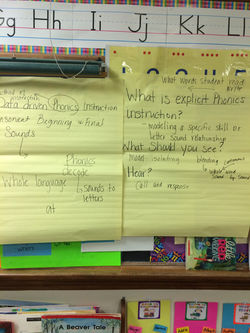 fwerf |
 vadfvdfa |
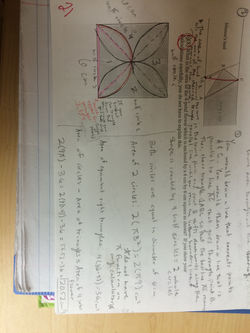 This math problem was solved by myself during an exam for a class I took on teaching math to elementary students. Throughout the class we practiced both solving mathematical problems and explaining them in an understandable way. |
 This work was also creating during the 'teaching math' course I took while at St. Norbert College |
 This work was done by myself and several others in my MEdT Cohort during our Math Methods course that gave us experience in teaching math in an engaging and understandable way. |
Reflection
It is important for a teacher to keep in mind that their students have varying preferences when it comes to how much they like to work with others, and how often they like to work independently. It is also important for teachers to understand that in today's world, having collaboration skills as well as being able to take on independent loads are equally valued in the work force and in varying social situations.
Creating and facilitating positive interactions between students is the first step to creating an environment conducive to teamwork within the classroom. Instituting differentiated behavioral management strategies help students to self regulate their emotions and take others into consideration as well. As teacher, giving these resources to the students as well as being a positive model for these strategies is key to creating a classroom in which respectful language becomes the norm.
Along with the facilitation of positive interactions between students, comes the engagement of students with the content and activities being taught. Getting to know your students is a key part of getting them engaged in the lessons being taught, as once you discover their preferred learning styles and interests, you can begin to tailor your instruction to catch and keep their attention and enthusiasm throughout the whole of the lesson.
If students feel that they hold the tools necessary to participate in their own learning and feel safe enough to take risks in the classroom, then they can then begin to let their curiosity and enthusiasm lead their investigations into the world around them. For many students, I have observed a greater struggle in feeling comfortable expressing themselves than reigning themselves in once they feel like they can truly explore themselves and the world around them.
I have been able to use this in my own classroom by differentiating instruction for the interests and learning styles of the various classes I have worked with. I plan to continue getting to know my students' learning preferences and how they prefer to work and explore the world around them. This will influence what activities I implement in my lesson plans and how I design my classroom for the year.
Additional Artifacts
Above are several links to several of my own reflections on the history if education, as well as links to several unit plans I had created to cover content for elementary school students (these unit plans are formatted to match the EdTPA style as of 2013).
Also above is a link that leads to a document listing different disabilities, as well as giving ways in which a student with this particular need can be assisted. There is also a link to a document from the Berlitz Language School regarding how to help a total immersion ELL student who is becoming frustrated with their learning.
Linked above are also are links to an annotated children's bibliography I have created to provide insights into which book would be helpful for a variety of different topics. This can be used to help find the most helpful and engaging literature that will benefit the students.